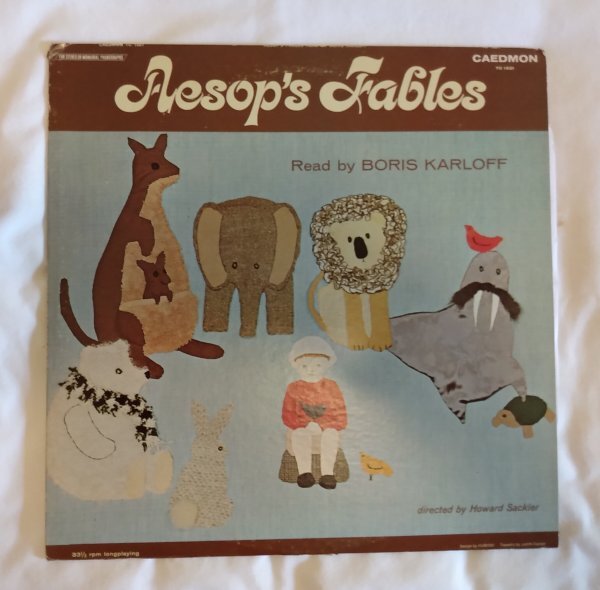
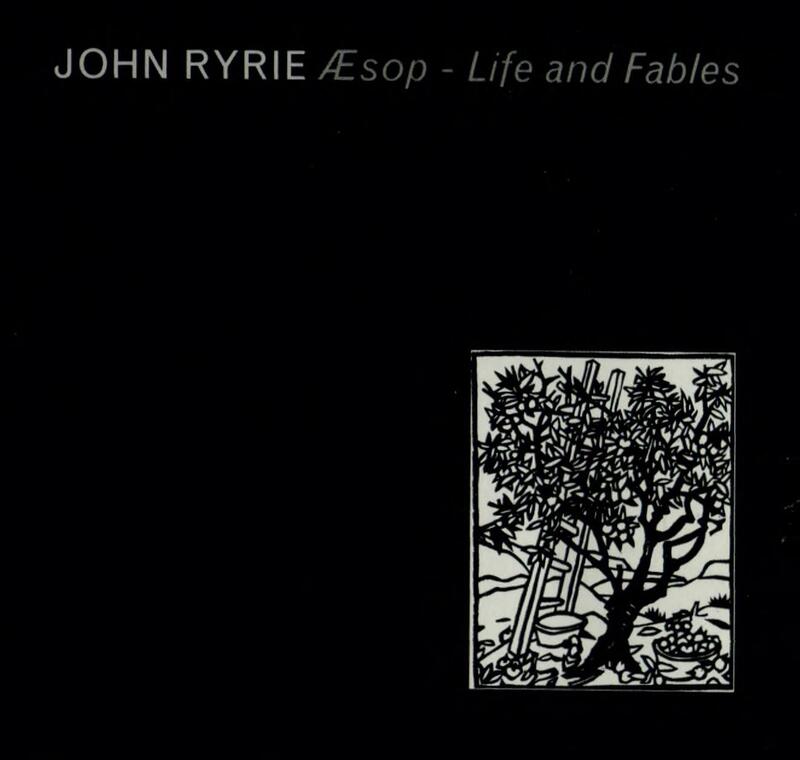
1967 Aesop's Fables. Read by Boris Karloff. Directed by Howard Sackler. NY: Caedmon.
Twenty-one fables on each side. Karloff's reading is sensitive but surprisingly low-keyed. The texts, whose author I cannot identify, seem classic, pithy, well expressed. This record is not as clear as the audio cassette of the same production.
1965? Aesop's Best Known Fables. Featuring the Regency Players. Talespinners for Children. UAC 11068. Los Angeles, CA: Liberty/UA, Inc. Sunset Records. Entertainment from Transamerica Corporation. $4.99 from Robert Beckley Newton, MS, through Ebay, May, '00.
From the jacket, it appears that each side presents three groupings of three fables each. Each grouping lasts between three and about five minutes.
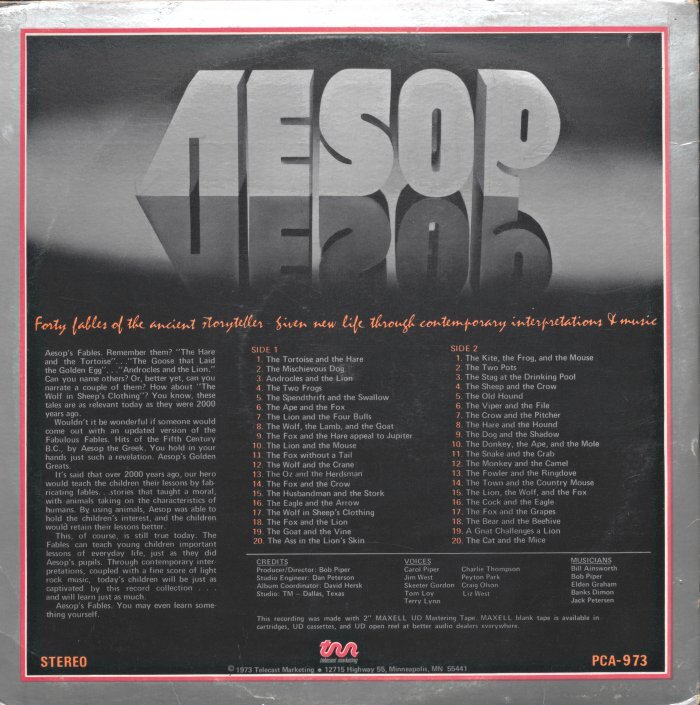
1973 Aesop. Stereo. PCA-973. Minneapolis: Telecast Marketing.
The dust-jacket lists a large number of contributors and claims “Forty fables of the ancient storyteller. Given new life through contemporary interpretations and music.” The dust-jacket cover is rather stark!
Advertisement in red and black for John J. McKendry's Aesop: Five Centuries of Illustrated Fables published by the Metropolitan Museum of Art. 11¼" x 15", folded into six quadrants.
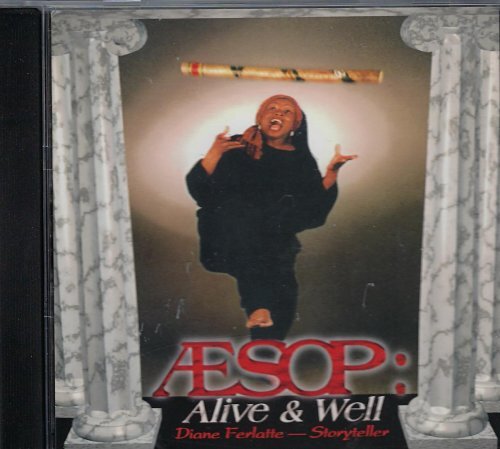
2001 Aesop: Alive and Well. CD. Diane Ferlatte, Storyteller. Erik Pearson, Guitarist. San Francisco: Olde West Inc.
Guitar background. Lively sung introductions to Aesop and to his life, followed by five stories 6 to 12 minutes in length. CP, BW, AD, "The Monkey & the Donkey," and DS. At the end there is a reprise of "Aesop, Alive and Well." I listened to "Poor Crow" and "The Shepherd Boy." Ferlatte continues to tell of Aesop's life between fables. Narration moves easily into song. The renditions are engaging. For example, the dying laugh of the shepherd boy at others' expense is very well done.
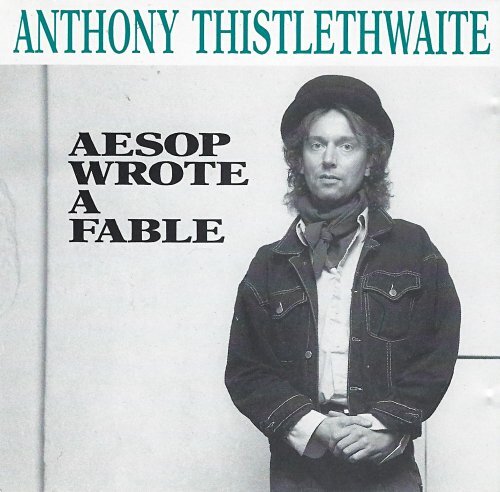
1993 Aesop Wrote a Fable. Anthony Thistlethwaite. Printed in France. London: Rolling Acres: Purpleteeth Productions.
This was a lark! I bid not knowing what the disc might entail. The disc is named after one song (the fourth track on the CD, lasting 2:17). That song starts with these words "Aesop wrote a fable about the tortoise and the hare. I always take the scenic route when I want to get somewhere." It soon moves into the refrain about the singer's woman: "She's a natural born lover, and she loves to take her time." Thus she never uses a calendar or remembers dates or hurries. Is she the tortoise or the hare? Aesop, you do not know what you started!
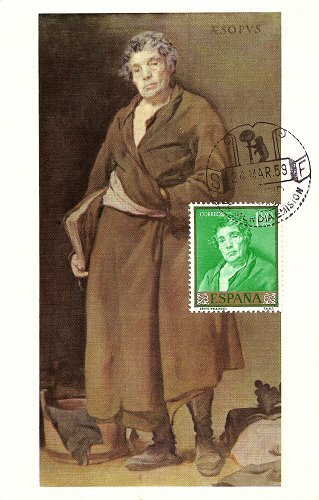
1958? Museo del Prado: Velazquez: "Esopo." Apparently with a "First Day of Emission" postmark from March 24, 1959 cancelling a 1.80 Ptas stamp picturing the upper section of this portrait in green. Printed in Spain. Ediciones Artisticas, Madrid. $5 from Laurentiu Cruceanu, Bacau, Romania, through eBay, August, '02.
I had not known that there is a Spanish stamp commemorating Aesop. If anything, the green stamp is clearer in its detail than is the colored reproduction of the painting. I will put the postcard with stamps and mail.
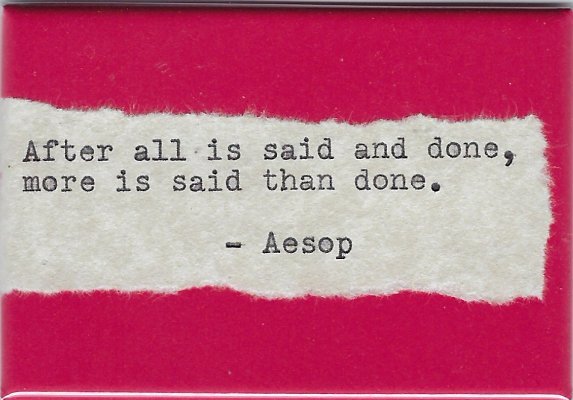
2020 Refrigerator magnet "When all is said and done, more is said than done. –Aesop".
I find it intriguing to see what statements are attributed to Aesop. I am sure that this sentiment fits with more than one fable, but I am unsure where this formulation entered the Aesopic tradition.
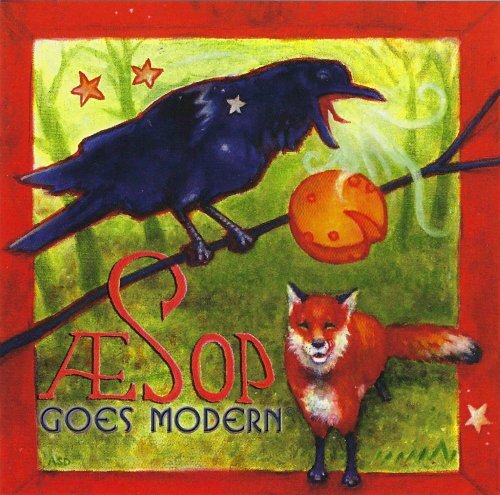
2004 Aesop Goes Modern. CD. 29 tracks. Directed by Daniele J. Suissa. Written by Kim Terrell. Produced by Marc Solomon. Virtual Theatre Project.
"Charming Educational Stories for Ages 4 and Up!" I agree. Seven-year-old Asher meets Aesop and Aesop's father, and they start to tell him fables. They wisely tell him early that there is no right answer to a story. There are musical interludes leading into this encounter and filling in as Asher asks other people what they think a fable means and returns with his best "answer." The last track in fact has a lyre playing for the donkey who cannot play it himself. Track 20 brings Danielle, who recites a La Fontaine's DW section by section in French, and Aesop translates. This version pleases me more than the one Aesop presented as his first fable. I expected a more radical "modernization" of Aesop here. I would say that his storytelling is here taken seriously for what it is.
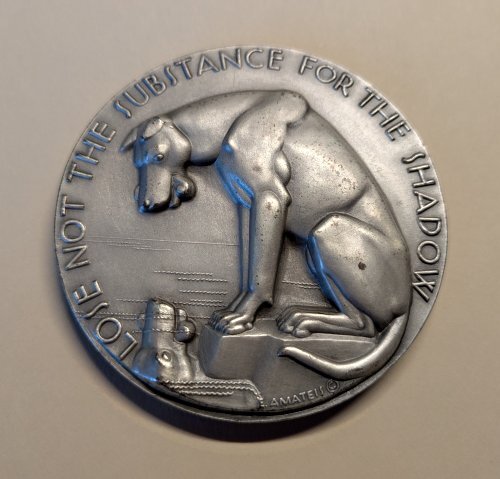
1940 Aesop Fables Society of Medalists SOM-21, silver plated by Edmond Amateis.
This double-sided medallion is both large (2.6” in diameter) and heavy. The seller notes that Amateis selected these fables for "their enduring timeliness and left the interpretation up to the beholder, as best suits his sociological, political, or economic inclinations." For me, both faces reveal a great deal in their lowest segment: the reflection in DS and the pinned dove under the regal hawk.
2002? Aesop Fable Placemats. 10” x 13”. Based on prints by Linda Powell. $5.95 from Lisa Baldwin on Ebay, April, '03.
I knew one of the six images used here from a card I was given in 1985, viewable under greeting cards. Now I have been able to recognize that Linda Powell was the creator of this set of designs, as seen in her prints. This set of six placements seems to include three fables: TH, FG, and GGE. The images are richly and brightly colored.
2011 Aesop Dress'd Or a Collection of Fables. Bernard Mandeville, based on Jean de La Fontaine. First published in 1704. The Augustan Reprint Society. Digitalized on CD by "The Again Shop." Wordcount: 19504. Pages: 67. Purchased online.
Our collection has three copies of the Augustan Reprint digitalized here. This kind of "book" created by a print-recognition device does not have much appeal for me. A photographic reprint of the book has, for me, much more appeal. I suppose that there is a kind of searchability achieved by this digitalization. I did a quick search for "fox" and immediately got 16 "hits." That is a good sign!
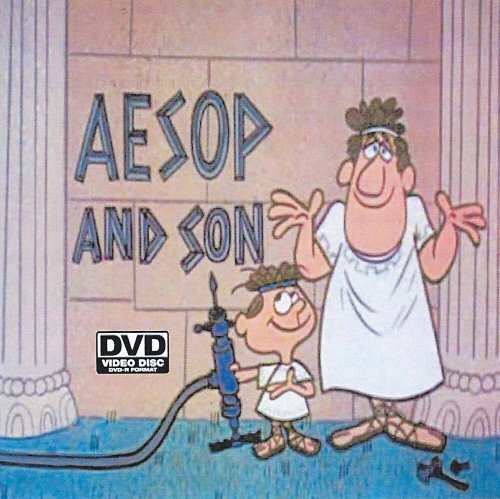
2010? Aesop and Son DVD Video Disc. World Wide Unique Media.
Good presentation of 23 of the "Aesop and Son" episodes. To my surprise, nothing similar is offered now in 2020 on the web. In fact, I had to purchase a whole set of "Rocky and Bullwinkle" to get the complete set of "Aesop and Son," which numbers some 39 episodes over five years. In this offering, I enjoyed stories parodying FS, BF, DS, and LM. The general pattern includes the wise-ass son actually telling the fable and then the father making up something different. The fable is regularly a springboard. There are many typical cartoon surprises. The dog needs to buy back his shadow. The fox only wanted to be accepted socially. The mouse becomes king, only to get "crowned" – hammered – by a female mouse. The crow with borrowed feathers gets rejected by both a female peacock and a female crow.
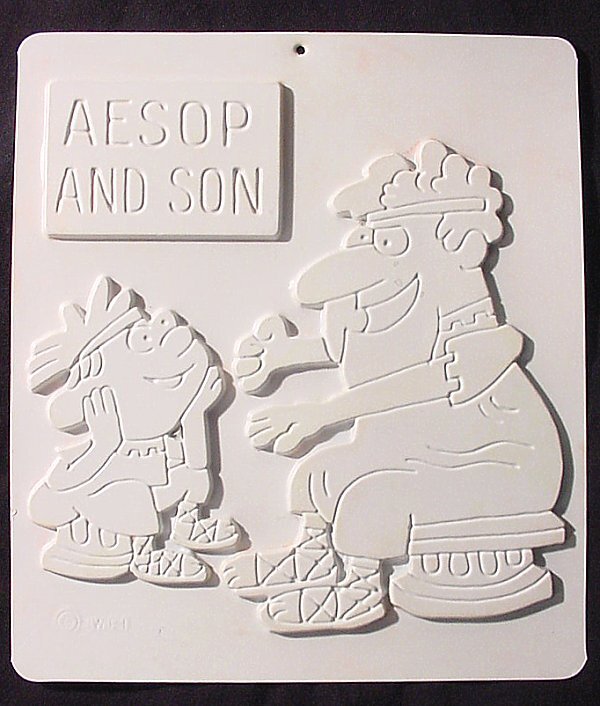
1960? Aesop & Son wall plaque. 8" x 11" sheer plastic.
I have enjoyed the "Aesop and Son" cartoons. I would never have expected to find an item like this. Click on the image to see an enlarged version.