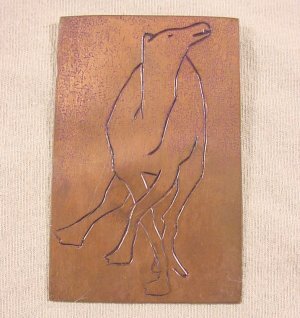
1992 Engraved copper brooch of a dancing camel after Lisbeth Zwerger by Brigit Viksnins. 1¾" x 2¾". On verso: "Seeking popularity is the fastest way to lose friends."
Brigit told me after class one day that she did not understand one text we had read that day: "The Dancing Camel." The next class I brought along for her Zwerger's wonderful illustration of the gangly-looking camel so contented with himself as he dances. She not only "got" the fable; she went to work producing this lasting memory of it. I recognized Zwerger's illustration in Brigit's brooch immediately.
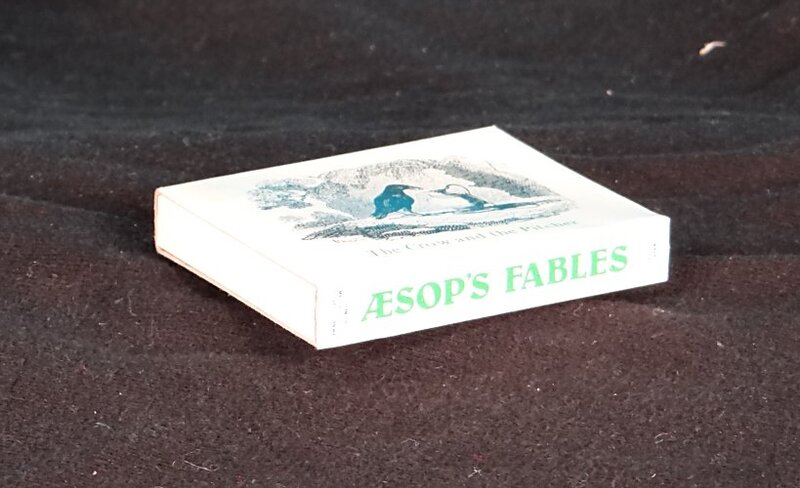
2000? Set of five English matchboxes, each with a black-and-white image on one face and the corresponding fable text on the obverse. "AV 30." Made in Japan. Cornish Match Company, Cornwall, St. Ives, GB.
A quick guess says that these are Bewick illustrations. The fables presented are OR, TH, CP, AD, and "The Countryman and the Snake."
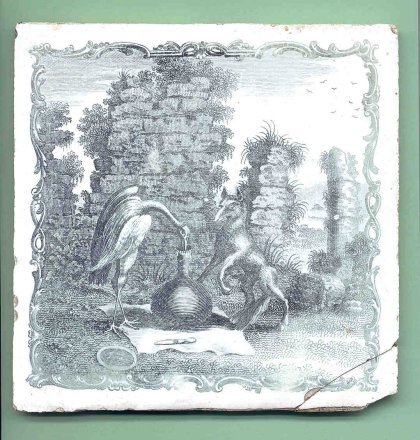
1760? One tile, FS, English Liverpool printed delftware tile by John Sadler. Slightly less than 5"x5". $104.01 from Rodney Harmic, Dover, DE, through Ebay, Feb., '00. Click on the image to see a larger version.
Transfer of printed design in black. "88" border. For some reason I find the image slightly hard to read. The stork has his beak in a big demijohn bottle. The fox on hind legs looks almost horse-like! Notice the shadow dish in the foreground. This tile is slightly smaller than nineteenth-century tiles I have found. The lower right corner is broken and repaired, and there are several small semi-circular chips around the front edge. I have kept some border in the scanner image of this tile to show the flaws around the edges. A great find!
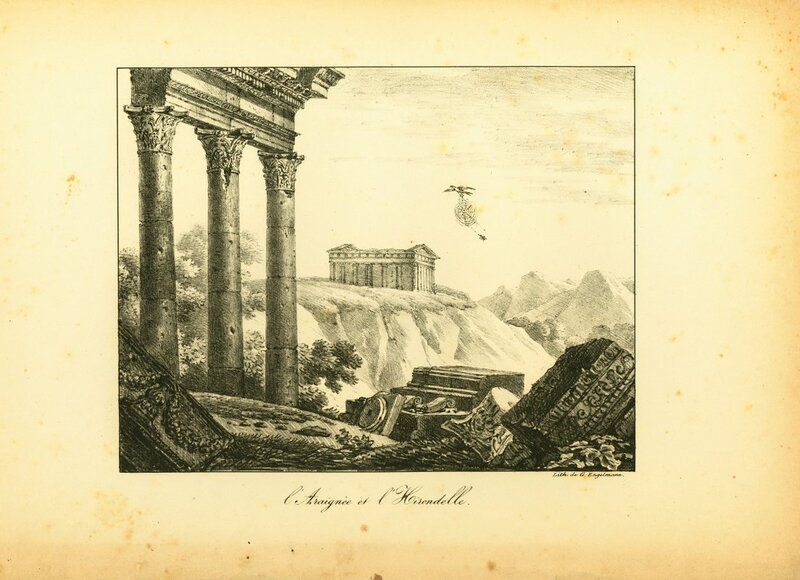
1818? 35 Lithographs by LeComte, Vernet, Engelmann and Mauraisse from about 1817 through 1820. Mostare 14½" x 10½". $80 from jordanb2011 through Ebay, Jan., '21.
Engelmann seems to be the engraver for many of these. I have assigned him authorship for those not signed by LeComte or Vernet. These seem to be pages from a book in our collection, "Fables choisies De La Fontaine ornees de figures lithographiques" from 1818, published by Engelmann.
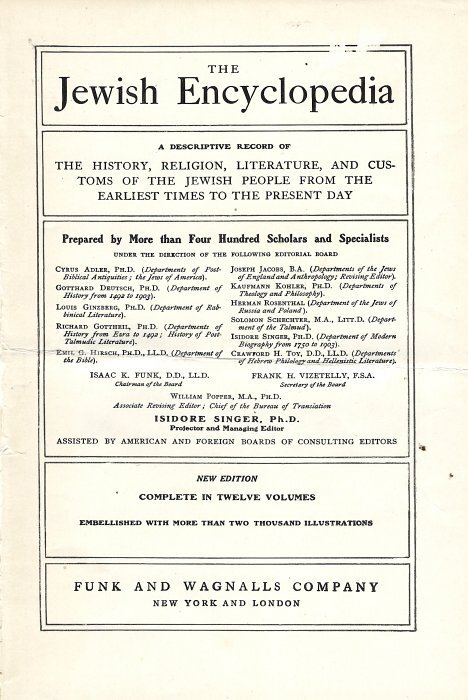
1901? Encyclopedia articles, "Aesop's Fables among the Jews" and "Fable." Isidore Singer, Managing Editor. NY: Funk and Wagnalls Company. Included in some one of the Jewish books purchased for the collection though Joshua Jakobovich, Shiloh, Israel, July, '22.
This article sees two streams of fables coming together after the first century: the Greek fables of Aesop and the Indian set under the name of Kybises. In the second century these two come together under the rhetor Nicostratus. In the third, these are turned into Greek verse by Babrius. The articles trace the place of fable in Hebrew Literature. Jewish fables take on some prominence with the 107 fables of Berechiah ha-Nakdan, apparently deeply related to the fables of Marie de France. The "Fable" article also mentions John of Capua. Jacobs "Fables of Aesop" is one of several sources mentioned here.
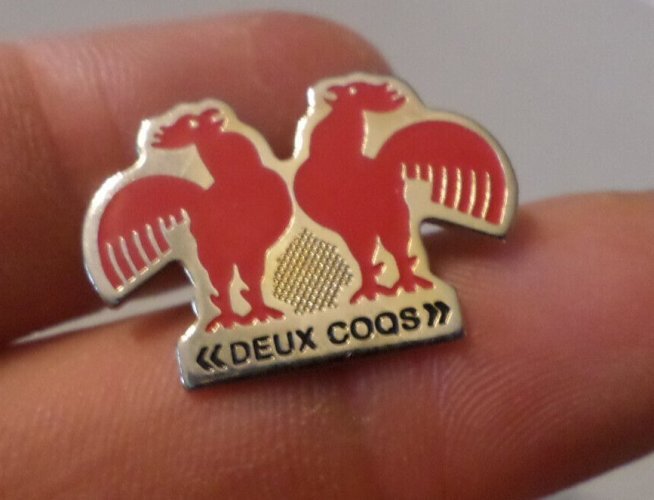
1990? Enamel Pin of La Fontaine's "Deux Coqs." 1" x .7". €6.90 from lolospin through Ebay, Oct., '23.
This looks to me like one pin that belongs to a larger set. There's the challenge for the collector!
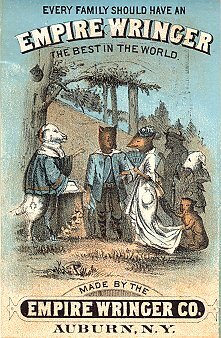
1915? I have found two colored cards advertising the Empire Wringer Company. The first pictures a ram marrying two foxes in a small gathering of animals. The second pictures mother and father fox with their baby fox in a kind of bassinet.
Is there a fable behind these illustrations? Is it perhaps from Renard? If so, would people have recognized it without any kind of a title? Of course it is hard to know anyway what a fox marriage has to do with washer wringers! The Empire Wringer Company was in Auburn, NY. Their "Empire"model, pictured on the verso of both cards, was available from A. Page in Wentworth, NH for the first card and from M.B. Potttle of Kingfield, ME, for the second card.
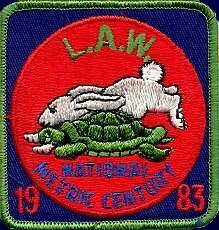
1983 Embroidered TH patch commemorating the L.A.W. Metric Century Bicycle event in 1983. 3" square.
Here is another first for this collection. I do not know what the "L.A.W." stands for, and I did not know that they had a bicycle race to promote the metrical system, but symbols like TH get around!
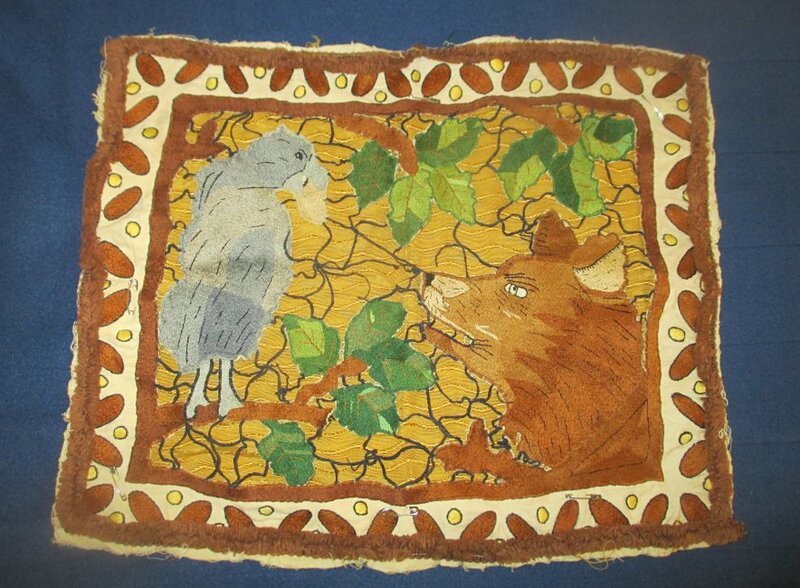
1950? Embroidered Pillow Top of FC. 19" x 15".
As the seller notes, there is a yellow background layer that is only pinned at the moment to this delicate representation of FC. If it really was used as a pillow covering, the cords attaching the figures to each other must have been put under great strain! Aesop shows up in many places!
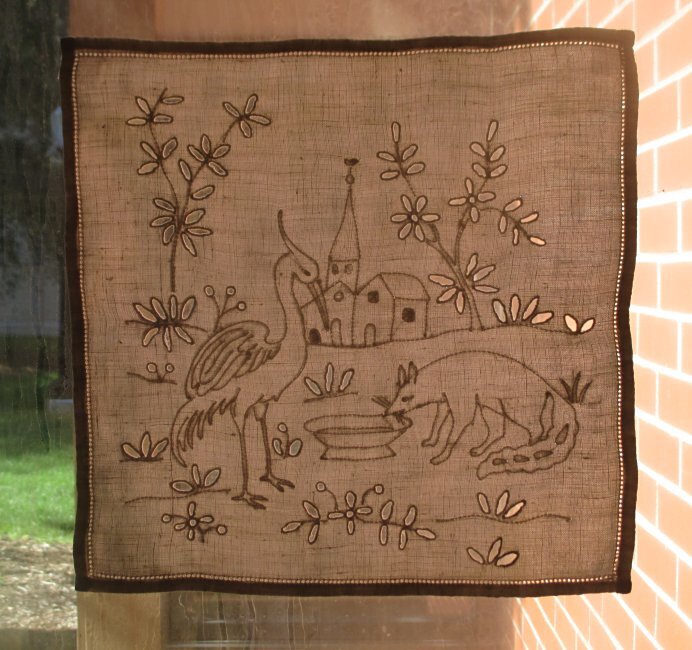
1950? Set of 8 different La Fontaine fables embroidered large linen cocktail napkins.
Here is another surprise. I hope these were never used as napkins! My first and second attempts to photograph these worthily failed, as the white thread does not stand out from the white background in a normal photo. Those experiences explain my decision to photograph them on a window that allows the back light to highlight the heavier threads that make up the designs. Lovely work! Click on the napkin above to see all eight.