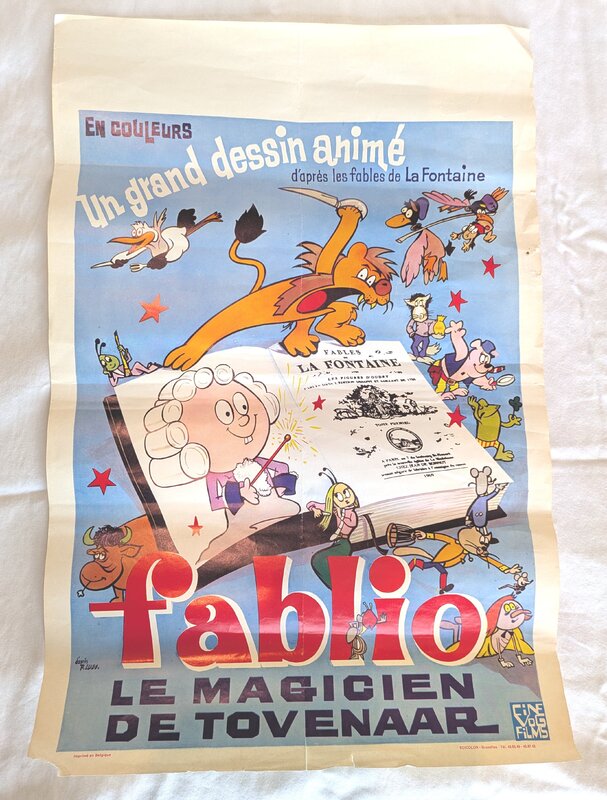
1980? Advertisement for “Fablio: Le Magicien de Tovenaar.” Un grand dessin animé, en couleurs, d’après les fables de La Fontaine. (Images) d’après Ludo. CineVog Films. Illustration 12.8” x 17.9”. Page 14.5” x 21.5”. Printed in Belgium Brussels: Edicolor. Unknown source.
“Fablio the Magician, the Wizard.” We have 19 books of Fablio, in French, English, German, and Spanish. Now here is a poster in Dutch! The film advertised here seems to bring together more fables than the books, which each develop one fable of La Fontaine. It is fun to notice and identify the various animals presented here, with Fablio at their center. Most of the books claim “Ludo” as their illustrator, while some speak of working from a film by Georges de la Grandière.
1966 “Fables for the Very Rich.” Advertisement for Francis I. duPont & Co, NY. The New Yorker, April 16, 1966. 4.6” x 5” on page 149, 7.75” x 11.25”. Source unknown.
This advertisement promotes tax-free municipal bonds, highlighted for their tax-exempt interest and high returns. The fable has a somewhat addled llama write himself a letter. “What does it say?” “I don’t know. I won’t get it until tomorrow.” Moral: the familiar isn’t always the known.” Apparently the ambitious reader should make herself or himself more familiar with municipal bonds. I find no others in a possible series on the web.
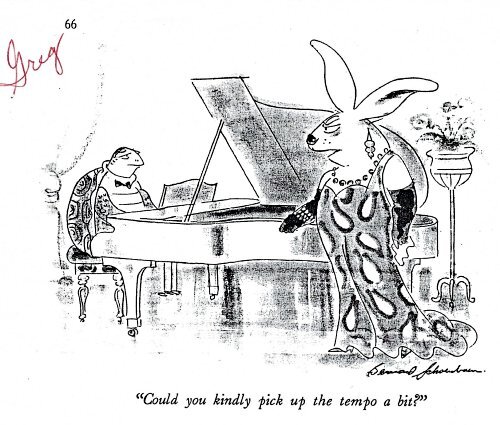
1992 “Could you kindly pick up the tempo a bit?” Bernard Schoenbaum. New Yorker. March 2, 1992. Xerox copy. Unknown source.
Part of the fun here is the caricaturing of the roles of the two principals, the large-bodied angry diva and the overweight tuxedoed supposedly-subservient pianist.
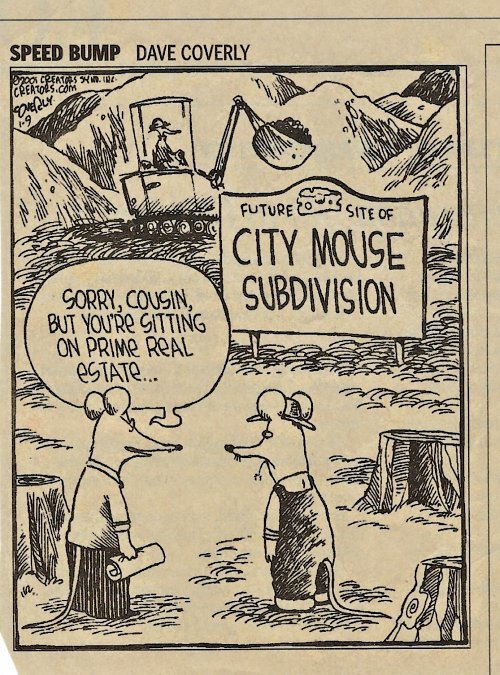
2001 Speed Bump. “City Mouse Subdivision.” Dave Coverly. Creators Synd. Inc. 1-9. Unknown source.
Surprise overturning of what we expect the city mouse to be saying to his country cousin.
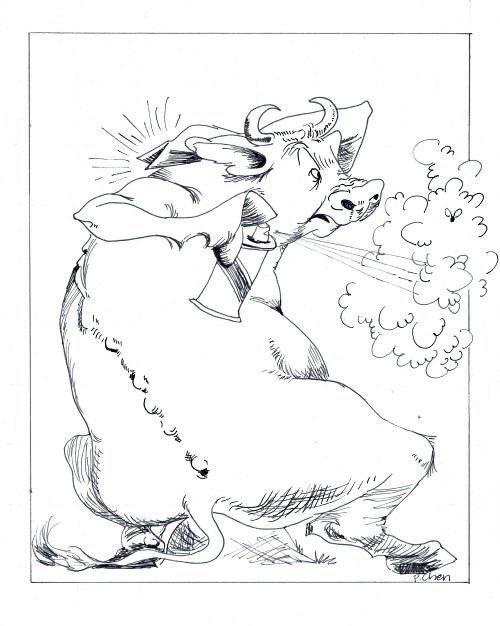
1992? “Bull and Gnat.” Pen and ink, 8.5” 11.”
Fables invite the fun of development, creative presentation, analogy, and time-travelling to different cultures and social circumstances. This delightful work takes the standard Aesopic fable of the gnat who reduces the bull to frustration and gives the bull a new defense. The artist uses well the fable’s standard strong contrast of size.
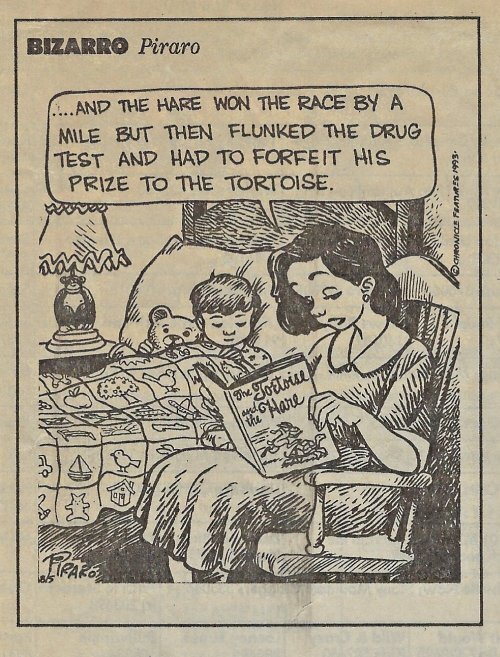
1993 “Bizarro.” Dan Piraro. Chronicle Features. Newspaper feature. Source unknown.
Since the advent of drug testing of athletes, humorous versions of the standard American fable of the race between tortoise and hare has frequently engaged that new element.
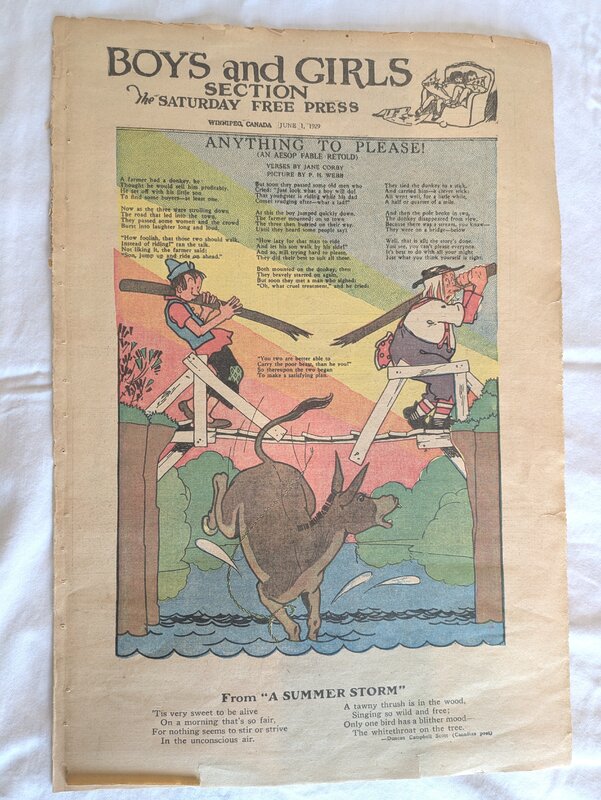
1929 “Anything to Please! (An Aesop Fable Retold)”. Verses by Jane Corby. Picture by P.H. Webb. Boys and Girls Section, “Saturday Free Press,” Winnipeg Canada, June 1, 1929. Unknown source.
This is a dramatic one-picture presentation of a great story! There are surprise and wonder on the humans’ faces; there may be a trace of animosity and anger on the donkey’s face. The rainbow background fits the loud presentation well. The rhythms and rhymes in the couplets are sometimes forced, but the story goes through a good progression. Here the son is the first rider, and that opens up a chance for him to jump down generously when he is criticized. This version ends with a moral: “Well, that is all; the story’s done. You see, you can’t please everyone. It’s best to do with all your might Just what you think yourself is right.”
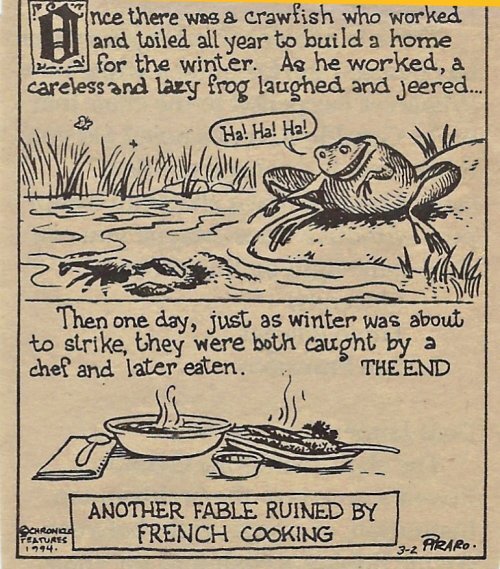
1994 “Another Fable Ruined by French Cooking.” Dan Piraro. Newsprint paper. Chronicle Features. Source unknown.
The fun element in this fable is that it begins like other fables. One expects that something surprising is going to happen between the two animals. Then the surprise comes: a chef catches and cooks both.
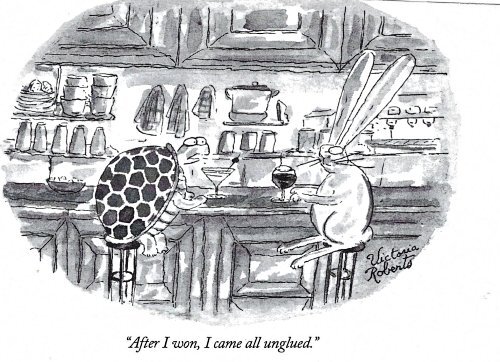
1995. “After I won, I came all unglued.” Victoria Roberts. New Yorker. August 7, ’95. Xerox copy. Source unknown.
Might the tortoise be speaking to a universal experience here, perhaps analogous to postpartum and post-super-bowl experiences. I am glad he is still talking to the hare, and the hare – although drinking – is listening!
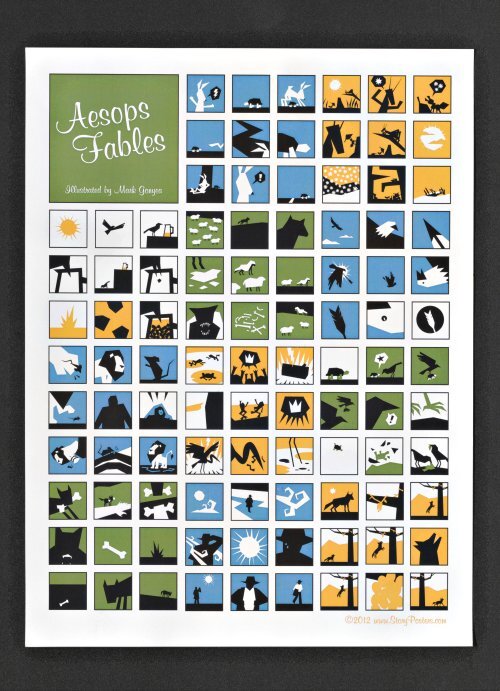
2012 “Aesop’s Fables” poster by Mark Gonyea. Two copies. 12” x 16”. Story Posters. Purchased from the artist on Etsy, August, ‘18.
Here is a fascinating approach to fables. The poster has eleven “blocks” of 3 x 3 images. Blocks have uniform blue, tan, and green backgrounds to let them be easily identified. Each block presents one fable through black-and-white images. A good example is the first, which pictures TH. By the third image, they are at the starting point. By the sixth, we have seen the hare racing and the tortoise plodding. The crucial seventh image shows the hare sitting perched against a tree. He awakens in the eighth, and the ninth shows the tortoise crossing the finish line. For another good presentation, follow DS in the lower left. The crucial middle image shows the bone falling. This is clever work!
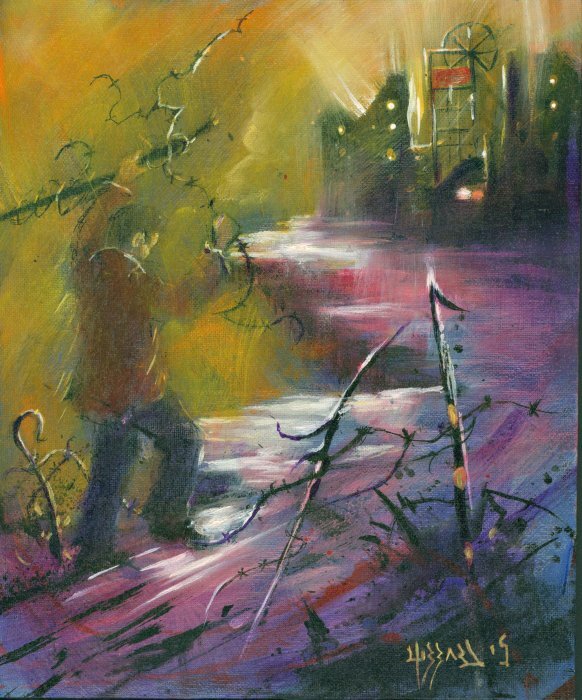
2015 “Aesop’s Fables: The man and the serpent.” Oil painting. 9.8” x 12. Richard Hubbard. UK. Unknown source.
This is a deeply imaginative presentation, I presume of the man who brought home a frozen snake. In the background shimmers a post industrial scene. The man gives every appearance of struggling, his hands with vines and his feed with barbed wire that may become supple tree branches. Curious stuff! I found anther work of his online that seems quite similar. It sold for 25 pounds. Are we to believe that we have an original painting of his?
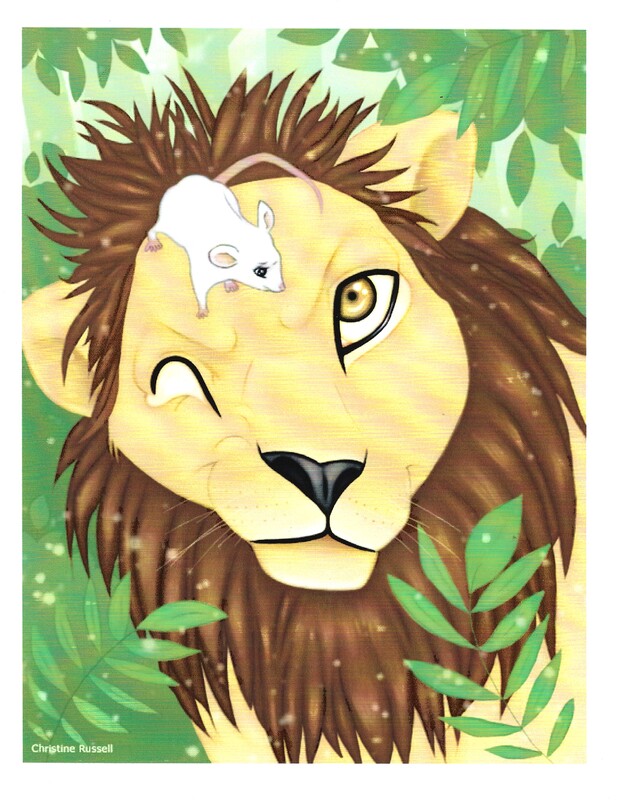
2004 LM: “Aesop’s Fables: Forgive me this time, I shall never forget it!” Signed “Christine Russell 03/25/04.” 8.5” x 11”. ESL Printables.
This delightful piece has appeared among the things we are trying in 2025 to catch up to. I have sought in vain for a connection with Christine Russell in 2004. What a delightful, lively presentation of LM!
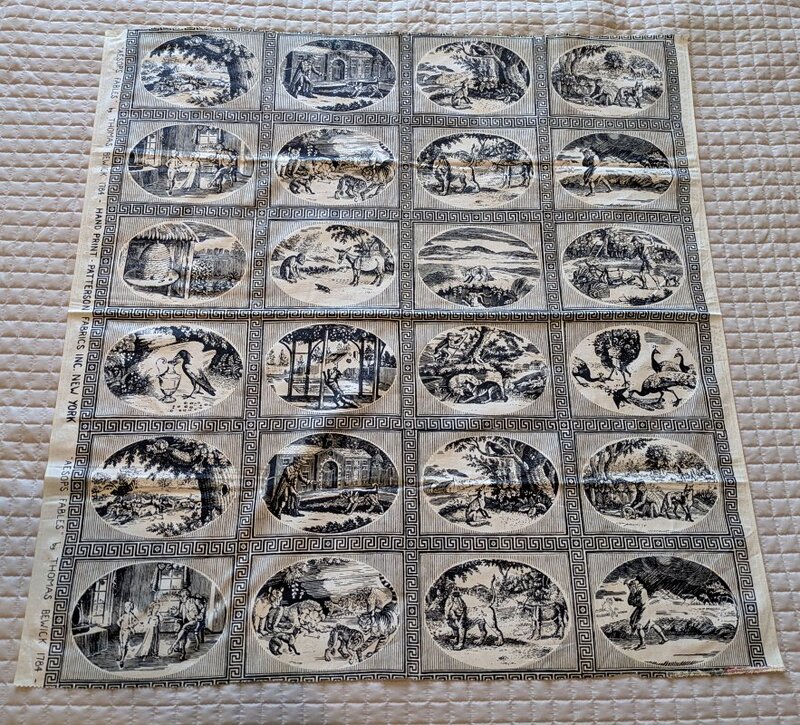
1980? “Aesop’s Fables Thomas Bewick 1784” hand print by Patterson Fabrics of NY. About 3’1” square. Source unknown.
Four rows of four rectangles each. My attempts to learn something about Patterson Fabrics have not been successful. Bewick may suffer from being enlarged from his exquisite woodcuts.
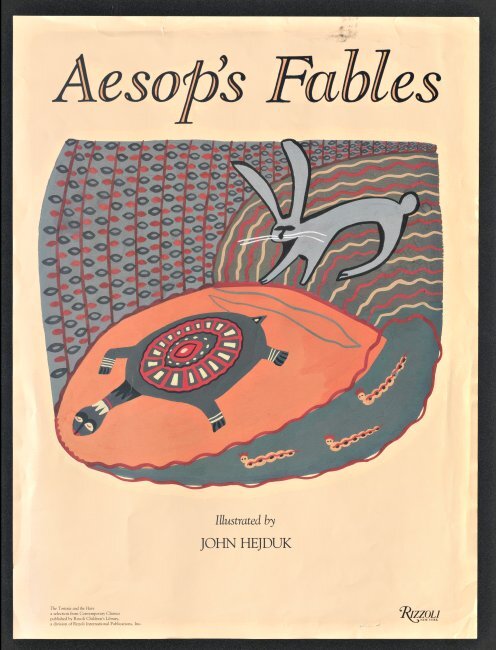
2007 “Aesop’s Fables Illustrated by John Hejduk.” Poster. 20” x 15”. NY: Rizzoli. Unknown source.
I was first alerted to the existence of this book at a Georgetown University celebration while I was a guest lecturer there. Imagine my surprise that the art gallery bookstore had a fable not yet in our growing collection! The TH image chosen here is apt for the book in this immense poster. Is this the biggest poster in our collection?
"Aesop's Fables" illustrates characters and objects from TMCM, LM, GGE, FG, FS, and TH. Simple, playful art graces this poster. The angry fox and the scurrying mice are perhaps the best characters here. See the 1988 book Aesop's Fables: Posters & Reproducible Pages based on this poster.
"Fable Search" presents twelve morals associated with well known fables. To what fable does this poster's "Half a loaf is better than none" moral belong?
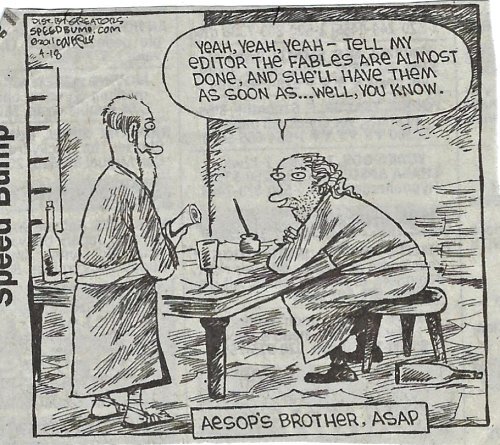
2011 Speed Bump. “Aesop’s Brother, Asap.” David Coverly. Speedbump.com. 4-18 Unknown source.
Here is yet another instance of this great cartoon, this instance distinguished only by its date in the upper left.
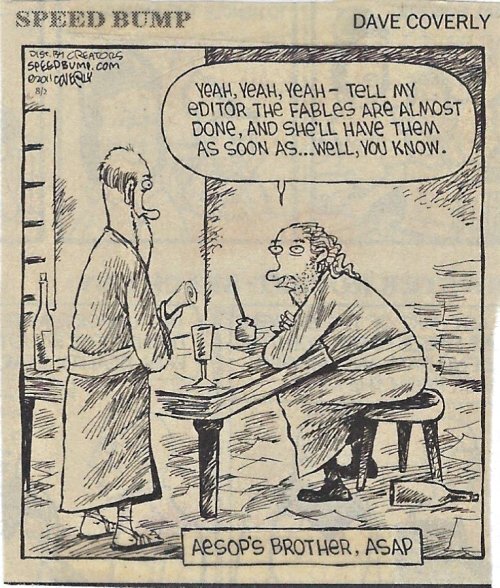
2011 Speed Bump. “Aesop’s Brother, Asap.” David Coverly. Speedbump.com. . Unknown source.
Good exploitation of a pun and the common knowledge that Aesop was in the ancient Western world. Well done! Match an ancient name with a trendy acronym, and you have no idea what will happen next!
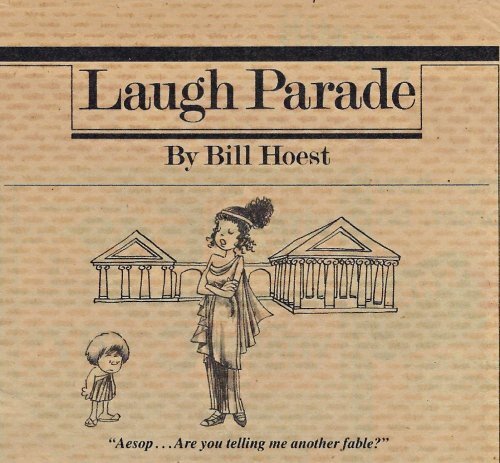
1980 “Aesop…Are you telling me another fable?” Laugh Parade. Bill Hoest. Likely from Parade, a Sunday newspaper supplement. Mounted on stiff card. Unknown source.
One of my favorite cartoons about Aesop. The expressions on both faces tell a wonderful story. I have used this cartoon frequently in presentations on fables.
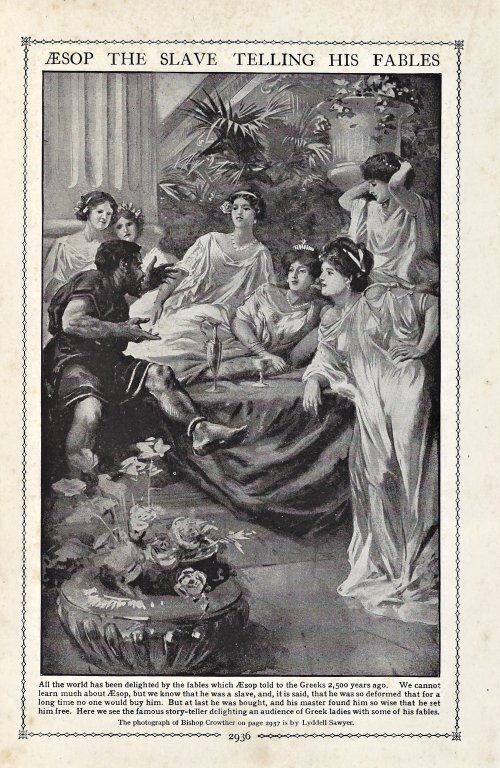
1901? Recasting of Roberto Fontana (Italian, 1844-1907), “Aesop Narrates his Fables to the Handmaids of Xanthus,” 1876; engraved by G. Gallieni.
This is actually quite an interesting piece, first of all because it is not faithful to Fontana’s original. I am creating a second page on this piece so that people can compare other versions of the piece. A second fascination for me is the question where this appeared. Perhaps something like the Book of Knowledge or a similar encyclopedic work? Click here to see our version and several versions online. The original seems to have been composed in 1876 and then published as part of the "Exposition Universelle de 1878" by Gebbie and Barrie. Gravure by Goupil Companie.
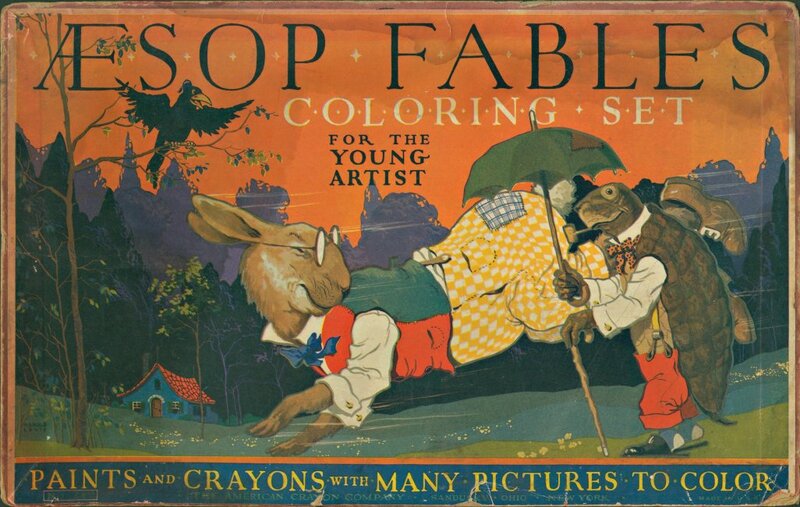
1940? Separated cover of “Aesop Fables Coloring Set for the Young Artist.” Paints and Crayons with Many Pictures to Color. Apparently produced by the American Crayon Company of Sandusky, Ohio. Measurements. Unknown source.
How I would love to know how this large cover – without side flaps – survived! Its illustration style is reminiscent of Milo Winter and Harry Rountree. Both animals are fully dressed. The hare wears glasses, while the tortoise smokes a pipe and has a cane in one hand and an umbrella in the other. I could find no parallels on the web.
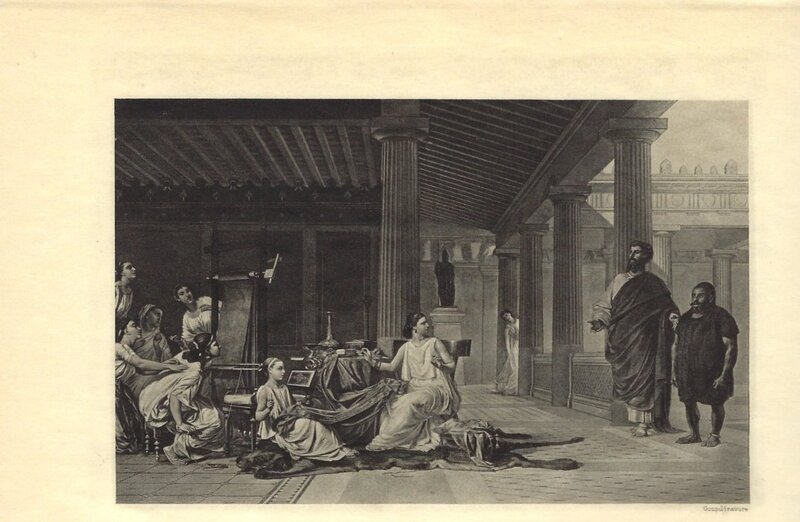
1908 “Aesop and Xantas.” Goupilgravure. Goupil & Cie. Image 6.4” x 4.2”. “Photogravure of the original painting.” $6.99 from redbuk on Ebay, Jan., ’01.
Alamy offers a print of this image titled d”His Master Introduces Aesop to the Family Circle.” Aesop here approaches the anti-type of an ideal body, not quite the “human turnip” some lives call him. This is the only time t hat I have seen “Xantas” rather than “Xanthos,” “Xanthus,” or “Xantus.” Goupil was apparently also the publisher of Roberto Fontana’s “Aesop Narrates His Fables ;to the Handmaids of Xanthus,” painted in 1876.
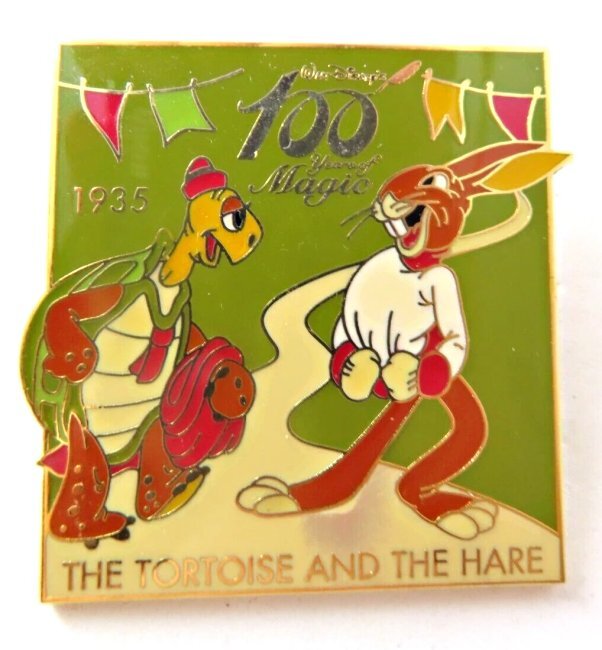
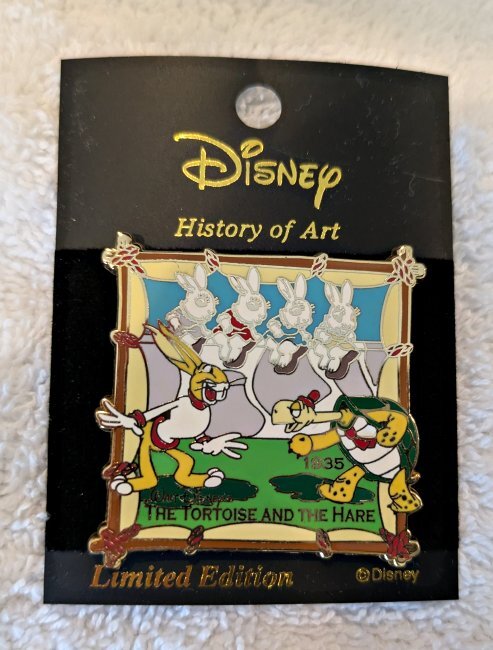
2003 “1935 The Tortoise and the Hare.” Limited Edition of 1300. Disney History of Art. LE 1300 #7836. 1.5" square.
This pin is at least directed to a more central moment in the story, as the two contestants face off at the start of the winding trail. At least I guess that it is the start, since Max is still smiling.
2003 “1935 The Tortoise and the Hare.” Limited Edition. Double pin. Disney History of Art. LE 1300 #25930. 1.5" square. Made in China. Two copies. Unknown source.
Disney keeps inventing ways to sell things! Apparently this series of the history of art is about Disney art. The scene brings together elements from the film, including the girls at Mrs. Cottontail’s school cheering on Max, the athletic hare.
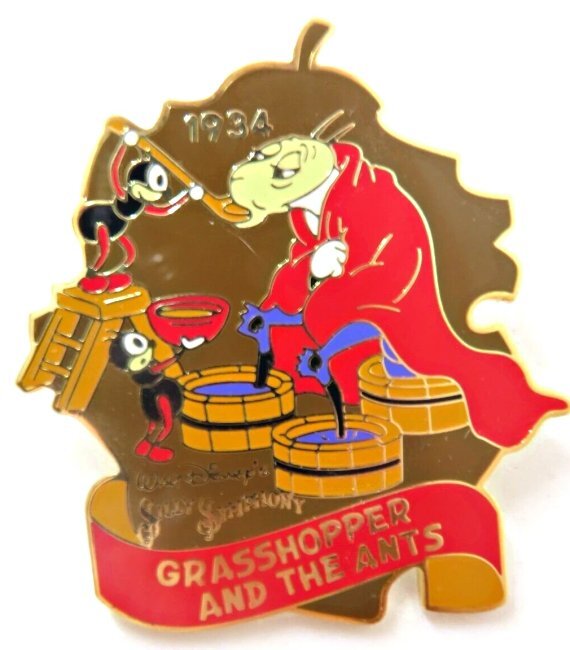
2002 “1934 The Grasshopper and the Ants.” Limited Edition of 2000. Disney History of Art. LE 2000 #17734. 1.5" square. Silly Symphony..
Disney here chooses a cinematically engaging scene as two ants spoonfeed the frozen grasshopper sitting blanketed and in hot water tubs.
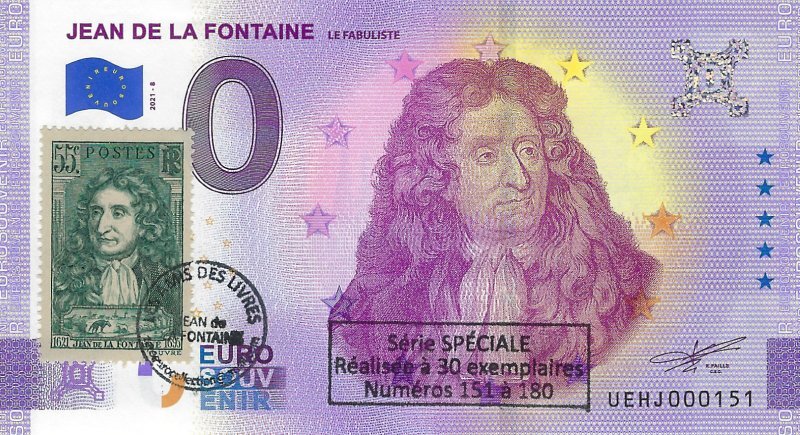
2016 "Zero Euro." Souvenir currency. $13.54 from Actualités d'Antan through Ebay, May, '22.
This is a beautifully executed bill. I am particularly taken with the grouping of colored symbols on the verso, with Mona Lisa keeping an eye on things. I was of course utterly unaware that such things exist!
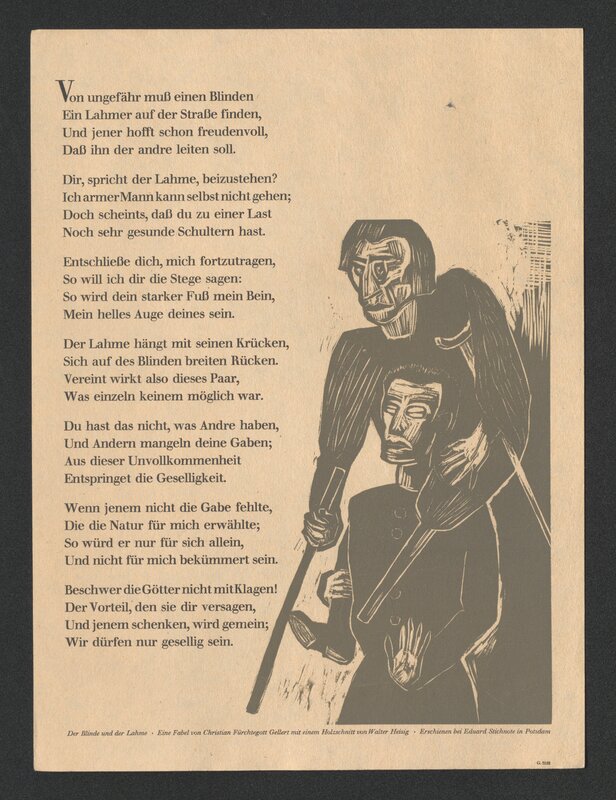
1947 "Zehn Fabeln," portfolio of prints printed by Eduard Stichnote in Potsdam. Artists: Walter Heisig; Otto Bunzel; Hans Leistikow; and Max Debus. 3 partial collections in portfolios whose flap shows a list of the ten. Unknown sources.
This collection is readily available on the web. The selection of fables, from various sources, is unusual. Several of these fables are only infrequently told. Sometimes the artistry seems as weird as a green-and-red ass! I find Lessing's pelican surprising, and I had usually thought of the Panchatantra's mysterious sound-maker as bigger than a little bell. I wonder what Potsdam was like in 1947.
The Green Ass with Red Legs (Gellert: Heisig)
The Blind and the Lame (Gellert; Heisig)
FC (La Fontaine: Bunzel)
GA (La Fontaine: Bunzel)
Hamster and Ants (Lessing: Debus)
Stallion and Horsefly (Gellert: Heisig)
Siskin and Nightingale (Gellert: Heisig)
Chicken and Bee (Lessing: Leistikow)
The Stupid Pelican (Lessing: Debus): Compare the copy just below.
The Stupid Pelican: Notice the lack of red elements.
The Fox and the Bell (India: Leistikow)