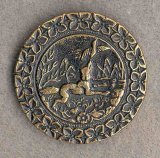
1890? One large button, 1 5/8" in diameter, showing a running fox (or dog?) and a fowl in flight just above it.
This is the largest button I have found. The two figures are surrounded by reeds, branches, and at least one blossom. There is a thick floral border around the perimeter. Three-piece construction. I have no notion what scene may be portrayed.
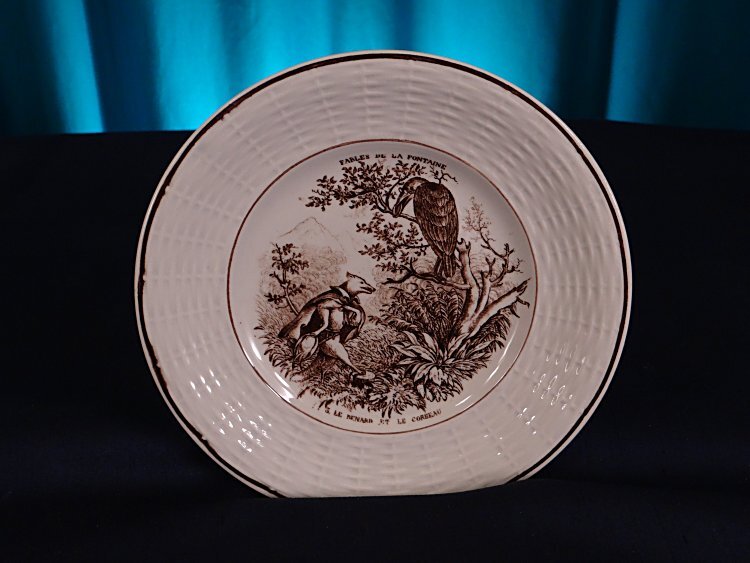
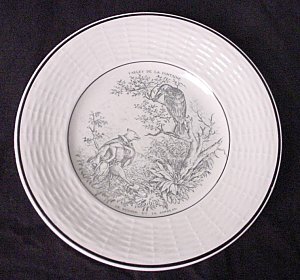
1930? 7" white plate from Sarreguemines, France. Inside a 1.5" rim there is a portrayal of FC (X 2). The front carries two inscriptions: "Fables de la Fontaine" and "3. Le Renard et le Corbeau." The back has a smudged "Digoin" stamp. $9 from Take a Second Look, Inc., Cuddebackville, NY, through Ebay, June, '99.
The front of the plate seems exactly the same as on the black-colored plate found earlier except that the front coloring is now brown. See my comments there.
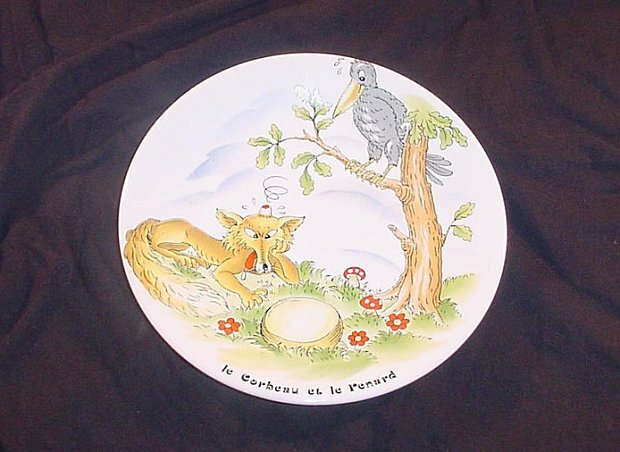
Le Corbeau et le renard Here the cheese, dropped by the crow, has landed on the fox's head and made a major bump. The fox is still dizzy from the experience. This kind of humor, which I have found frequently on French post cards, I find here for the first time on tableware.
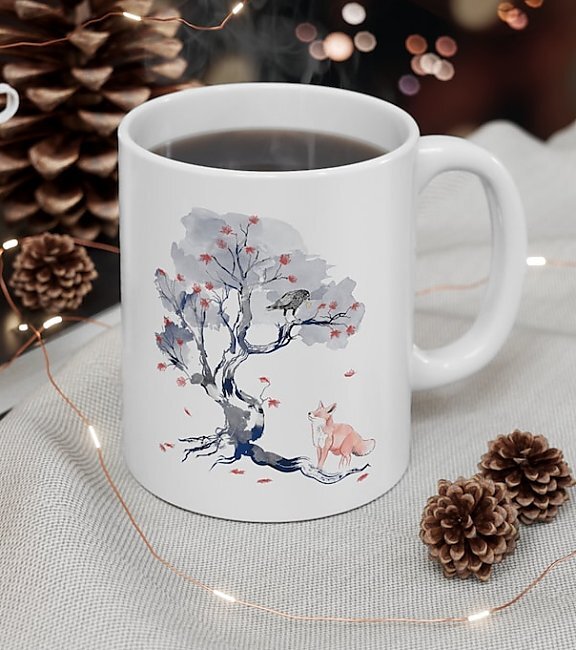
2023? The Fox and the Crow Fable Mug. Ceramic. 3¾" high. Identical scene on each side. $19.54 from Mangastory through Etsy, Jan., '25.
Lovely blues and brown, with just the touch of yellow in the crow's cheese. I am encouraged by the way that Etsy's craftspersons are discovering good motifs in the fables.
1890? 1 circular FC button, brass, .75" in diameter. Unknown source.
The image is familiar. This is one of our smaller buttons. No rim. The button itself is of one-piece construction, with a metal eyelet welded onto the back.
1930? 7" white plate from Sarreguemines, France. Inside a 1.5" rim there is a portrayal of FC (X 2). The front carries two inscriptions: "Fables de la Fontaine" and "Le Renard et le Corbeau." The back has "Fables de la Fontaine" and "Digoin/Sarreguemines/France." $33 from Brown Pelican Antiques, Panama City, FL, May, '99.
This illustration uses Grandville for the basic form of the raven but the rest of the scene is differently conceived. The briskly walking fox wears a cape and carries a hat.