Comics and Comical Cartoons
Comics and Comical Cartoons
Fables appear naturally among print comics and cartoons. I have dived those that I have found into series and those either individual or about whom I do not know what series they come from:
-
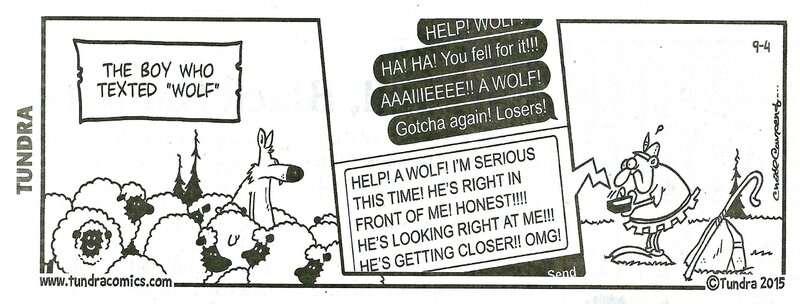 “The Boy Who Texted ‘Wolf.’”2015 Tundra comic. “The Boy Who Texted ‘Wolf.’” Photocopy. Tundra Comics. Unknown source. The close-up of the phone screen shows a new message following the “Gotcha” messages. The first panel shows a wolf among the sheep.
 -
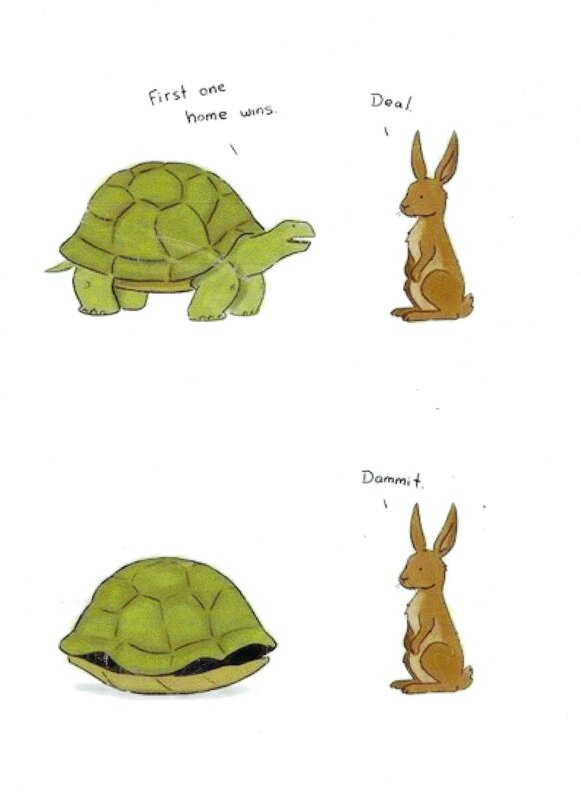 TH Cartoon by Liz Clomo2010? TH Cartoon by Liz Clomo. 12” x 16”. $16 from Teepublic, Jan., ’26. Clever! Compelling visual simplicity!
 -
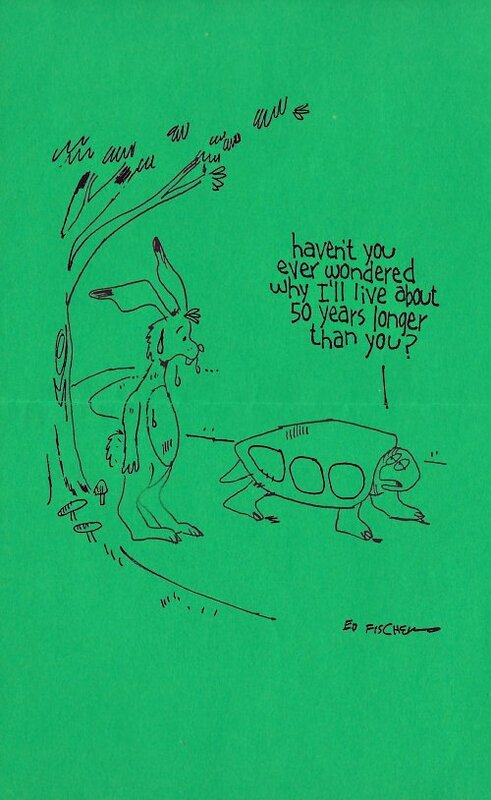 A TH Conversation2010? A TH Conversation. Ed Fischer. Unknown venue. Unknown source. The hare in this cartoon is sweating profusely. TH is so well known that it can be turned into cartoons touching on many facets of life.
 -
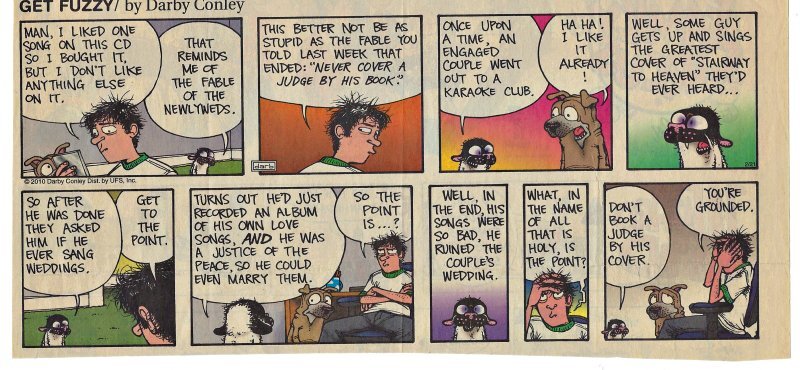 Get Fuzzy2010 Get Fuzzy. Darby Conley. UFS. Unknown venue. Unknown source. I apologize to viewers and readers. “Fable” gets used so broadly that I often do not know whether I should include materials that I think do not pertain to this collection. Sometimes I decide to err on the side of caution before I hand the object on elsewhere. The malaprop here is, I believe, a real groaner, far fetched and not worth the fetching.
 -
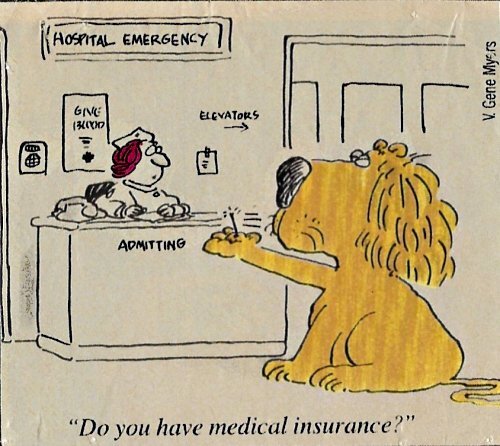 "Hospital Emergency."2000? "Hospital Emergency." V. Gene Myers. Unknown source. A lion with a thorn in his paw is at the admitting desk of a hospital emergency room. A nurse, seated behind the desk, asks the all-too-common question, "Do you have medical insurance?" V. Gene Myers is known for his gag cartoons, which have appeared in publications such as Playboy and Good Housekeeping.
 -
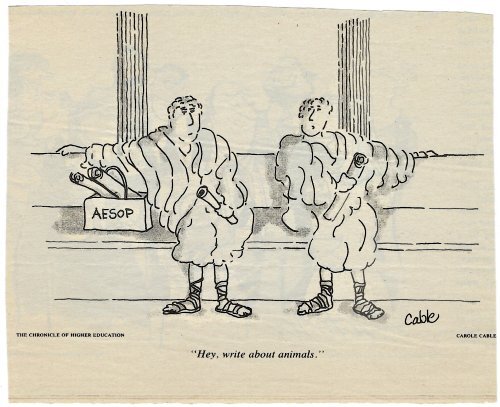 “Hey, write about animals.”2000? “Hey, write about animals.” Carole Cable. The Chronicle of Higher Education. Date uncertain. Unknown source. The fun here is that, as I understand the cartoon, Aesop is applying for writing jobs or trying to get a piece of his writing accepted. After reading one of his manuscripts, the publisher gives him a tip. Part of what is going on here is that people associate Aesop with animal stories, even though fables use virtually anything as characters.
 -
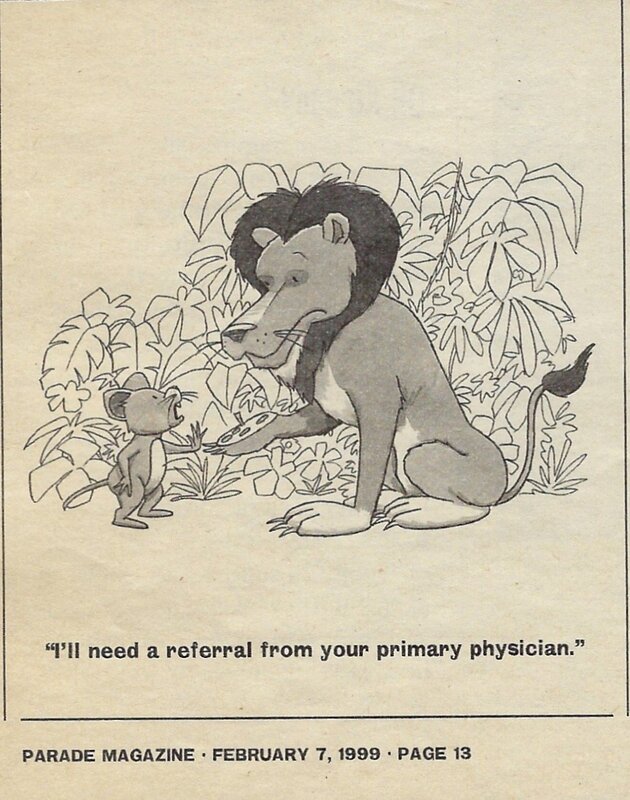 “I’ll need a referral from your primary physician.”1999 “I’ll need a referral from your primary physician.” Unnamed artist. Parade Magazine. Feb. ‘7, 1999. Unknown source. The discrepancy generating the humor here is between the supposedly simple interaction of the fable and the complex medical care systems of countries like the USA. I note elsewhere my confusion with exactly how this fable runs.
 -
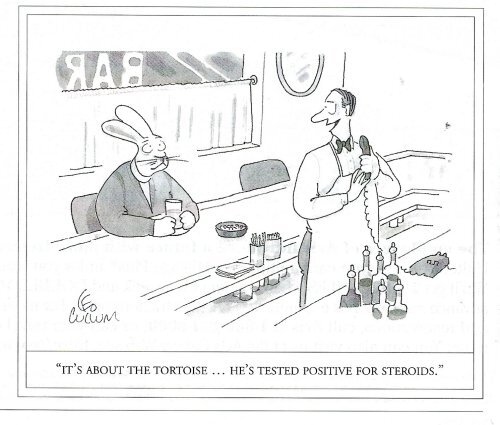 “It’s about the Tortoise.”1996 “It’s about the Tortoise.” Leo Cullum. Hemispheres. Nov., ’96. Unknown source. The hare is drinking, perhaps to deal with his shameful loss in the race. Now comes the news that the tortoise raced illegally. Cleverly done!
 -
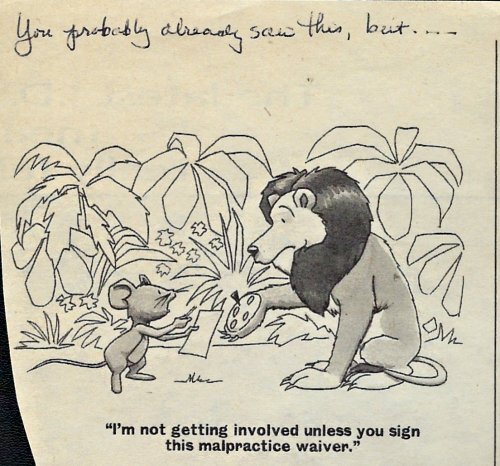 “I’m not getting involved unless you sign this malpractice waiver.”1995? “I’m not getting involved unless you sign this malpractice waiver.” Unnamed artist. Unknown venue. Unknown source. Yet another play on the complexities of modern health care. Readers will know from comments on other cartoons that I have difficulty with this apparently broadly known fable. What precisely is the story? In any case, a friend presumed that I may have already seen the cartoon. That is never a reason to hesitate to contribute to the collection!
 -
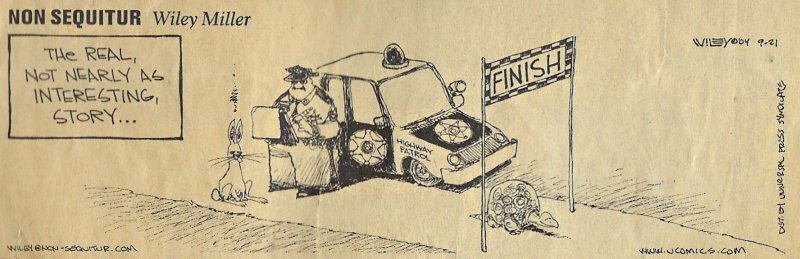 “The Real Story.”1994 “The Real Story.” Wiley Miller. “Non Sequitur.” September 21, 1994. Universal Press Syndicate. Unknown venue and unknown source. Because TH is the best known fable in the USA, it occasions frequent “reinterpretations.” In this one, the hare probably did not go to sleep. He got arrested for speeding.
 -
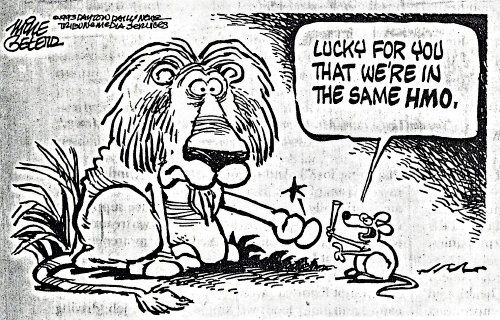 “Same HMO.”1993 “Same HMO.” Mike Lester. Dayton Daily News. Tribune Media Services. Xerox copy. Source unknown. The conversion to HMO organization for health care of the USA leads to this humorous application to the story – a fable story I think I do not yet understand – about a mouse taking a thorn out of a lion’s paw.
 -
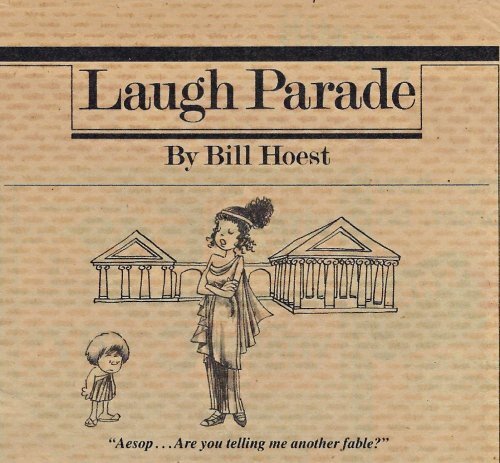 “Aesop…Are you telling me another fable?”1980 “Aesop…Are you telling me another fable?” Laugh Parade. Bill Hoest. Likely from Parade, a Sunday newspaper supplement. Mounted on stiff card. Unknown source. One of my favorite cartoons about Aesop. The expressions on both faces tell a wonderful story. I have used this cartoon frequently in presentations on fables.