Career and Advocacy
Career:
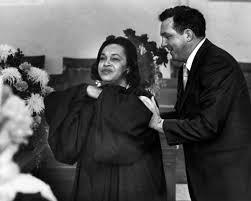
In 1949, Pittman joined her father’s private firm and worked there until she became a Douglas County attorney in 1964. Hiring discrimination kept women from getting jobs in non-family law firms (Smith, 1998). At the time, she was the only Black American woman lawyer in the state of Nebraska. Across the country, there were only 39 Black American women lawyers (Smith, 1998). Due to racism, she was under greater scrutiny, and more was expected of her. Despite that, she gained another first, becoming the first Black woman to be elected to public office on the Omaha School Board in 1950 (Smith, 1998). She worked on the Omaha School Board for a short time, resigning from the board in 1951. In 1956, Pittman wrote in the Omaha Guide titled “The Last Word.” This editorial emphasized how each person should advocate for their rights. In 1971, she was named “Woman of the Year” by the Omaha Business and Professional Club (Lovallo & Sasse, 2019).
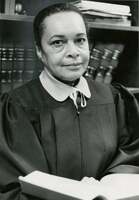
After working as a lawyer, she became the first female and first African American judge in the State of Nebraska and likely in the nation. In 1971, she was appointed to judgeship by the state Governor and served as the Douglas County Municipal judge (Smith, 1998). As a judge, she was known for upholding the law fiercely with care and fairness. In 1973, she was awarded an honorary doctorate from Creighton University for “pioneering accomplishments in her profession and community” (Smith, 1998). She continued to work for the Omaha Municipal Court until 1986, when she retired. It is thought that her decision to retire early may have been influenced by a lack of support for her retention from local lawyers.
Advocacy:
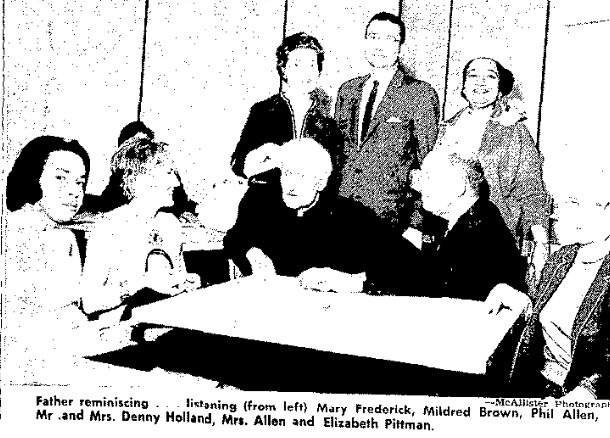
Elizabeth Pittman was heavily involved in Omaha's Near North Side YWCA, the local NAACP chapter, the Omaha Urban League, and the National Federation of Settlements and Neighborhood Centers (Wirth 2022). She maintained lifelong membership in these organizations and helped lead them on the national level. These groups fought for Black American civil rights both in Omaha and across the nation. In addition, she served on the Governor’s Commission on the Status of Women, which helped promote greater equality for Nebraska’s women (Wirth 2022). Throughout her life, Pittman was deeply dedicated to promoting justice for those historically disenfranchised.