The Work: The Lincoln Motion Picture Company
To say that black film did not exist before George and Noble Johnson began the Lincoln Motion Picture Company is a misnomer; black themes and subject matter in short and feature-length fiction, documentaries, and animated films had vital impacts on these varying creative projects, both foreign and domestic. Musical tracks by Louis Armstrong or Edward “Duke” Ellington were massively impactful on cultural touchstones such as Daniel’s tracks for Betty Boop or Duke’s efforts on the track “Minnie the Moocher.” Participation by black writers, actors, directors, etc. was common in the silent film era, though their inclusion in various projects was often downplayed or ignored (Klotman 123-124).
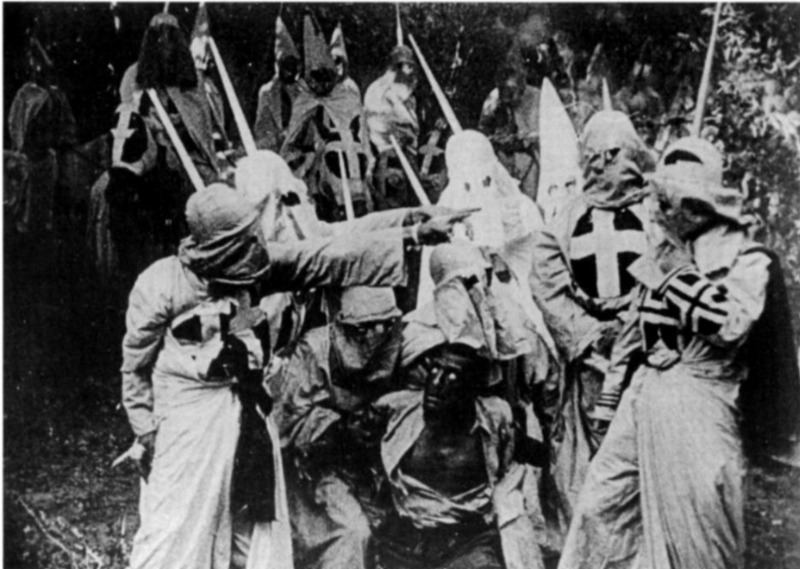
Still frame of the notorious lynching from The Birth of a Nation
Beyond ignorance and silencing was active hostility and racism depicted in major films. Docudramas like those purportedly from Theodore Roosevelt’s east African safaris in 1909 portrayed Africans from the countryside as brutal and without common decency, depicting the African pastoral scene as one of either savagery or, at its very best, as a quaint, primitive pre-civilization (Lyman 49-50). In most films in America at the time, minstrelsy and blackface was king, with white actors portraying black caricatures in stereotypical ways, the most notable of which was The Birth of a Nation, a revisionist look at the Reconstruction era of the South chock full of minstrelsy and glorified lynching. The first film to be shown at the White House, it was released in 1915 just one year before George and Noble Johnson began their company in 1916 (Wallace 85).
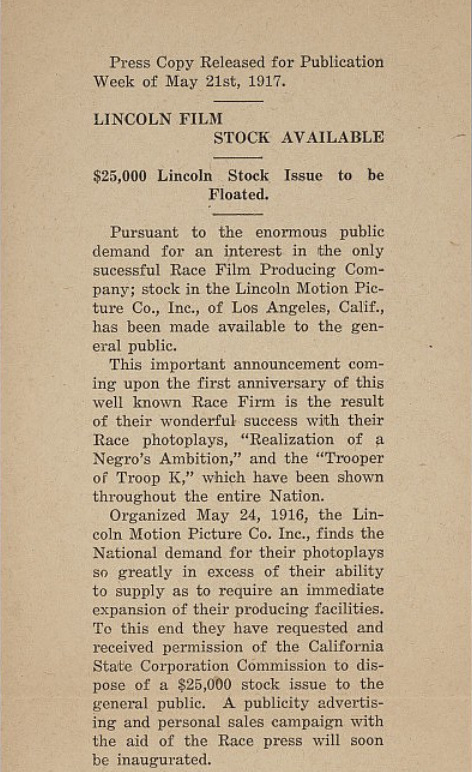
Therefore, the work of George and Noble Johnson surpassed the importance of developing one singular film company. Moving beyond slapstick comedy and humiliating stereotype, the company was organized in the attempt to showcase black talent and tap into a profitable market for black audiences wanting to see entertainers of their own race be included in the art that they consumed (McClure 1, Leab 324-325). Ultimately, the company produced five films: The Realization of a Negroe’s Ambition (1916), Trooper of Company K (1916), The Law of Nature (1917), A Man’s Duty (1919), and By Right of Birth (1921). Each film was produced with a shoestring budget but to surprised and delighted audiences (Leab 326).