Life
Early Life
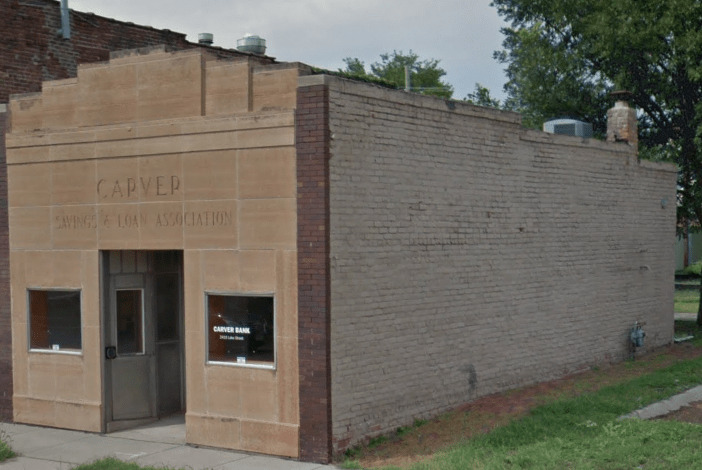
Elizabeth Pittman was born in 1921 in Council Bluffs, Iowa. Shortly after she was born, her family moved to Omaha. When she was growing up, Omaha was discriminatory towards Black communities. Black communities were restricted to certain neighborhoods and schools (a process known as “redlining”), denied jobs, and given lower-level jobs. During the early 20th century, North Omaha became the center of Black Communities. It was in North Omaha where Pittman’s father, Charles Davis, founded the Carver Service and Loan Association in 1944 with a group of local Black leaders (Lovallo & Sasse, 2019). Her father worked as a lawyer and advocated for Black communities to be empowered economically. It was his work that would inspire Pittman to become a lawyer herself (Smith, 1998).
Education
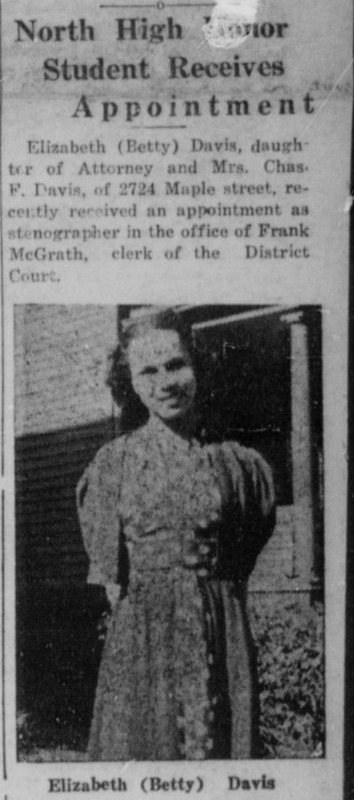
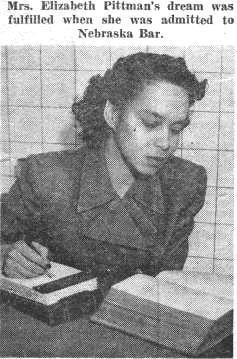
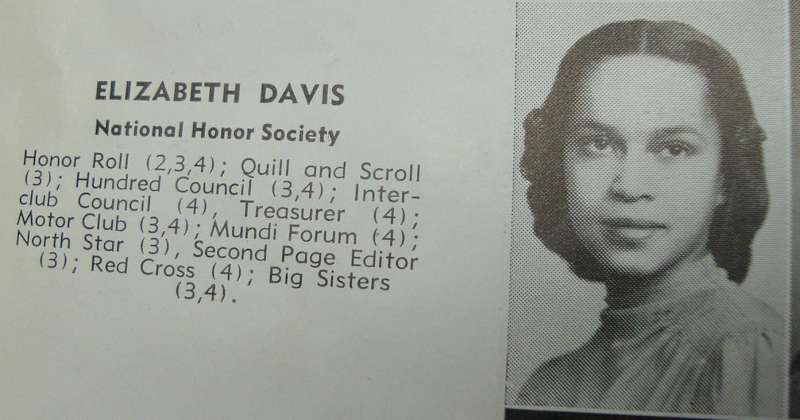
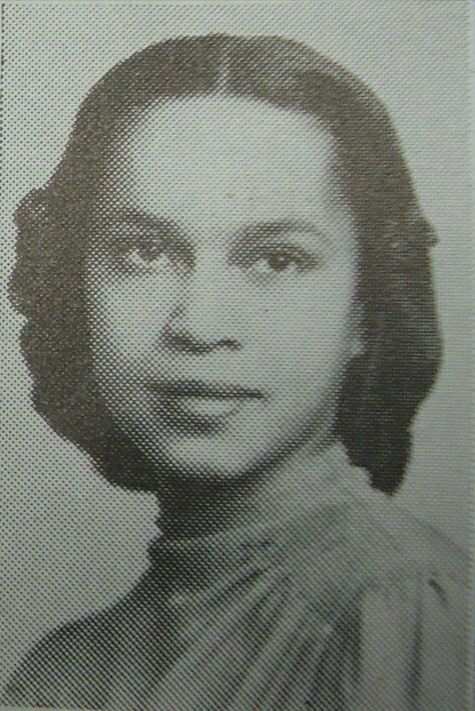
During the 1930s, Omaha was very discriminatory toward the African American communities, restricting them to certain neighborhoods and schools. Although Black students were often limited to Central High School or Tech High School, families were able to get their children into better schools. Elizabeth Pittman was a part of the small number who were able to attend a high school considered not acceptable for Black Americans, North High School. During her time at North High School, she excelled and showed her drive, passion, and determination through all she was able to achieve. The yearbook entries show that Elizabeth had eleven major acknowledgements, including National Honor Society, honors roll, and class treasurer. These are very significant because at the time, these were all against social norms, showing Elizabeth's drive and determination at an early age not to let social barriers get in the way of her accomplishments. She graduated from Omaha North High School in 1938 and attended the University of Nebraska-Lincoln, where she majored in political science and history. Elizabeth attended there for two years and then transferred to Creighton to finish her bachelor's degree (Lovallo & Sasse, 2019). She then went on to Creighton Law School and became the first black woman to graduate in 1948 (Buller 2016)
Personal Life:
Pittman was a frequent contestant in North Omaha’s beauty pageants throughout her twenties. Deeply religious, she was also a lifelong member of St. Philip Episcopal Church. It was the segregated Episcopal Church for African Americans at the time (Lovallo & Sasse, 2019). While in her thirties, Elizabeth attempted to become a national representative for the Episcopalian Church. She lost the election, likely due to her status as an African American female (Lovallo & Sasse, 2019). In 1950, Pittman made her first appearance in Who’s Who in Colored America (Lovallo & Sasse, 2019). This was an incredible honor for her, and she was frequently included in the book in subsequent years. Born Elizabeth Davis, she married Dr. Arthur Pittman, a veterinarian (Lovallo & Sasse, 2019). The only African American veterinarian in Nebraska from the 1940s through the 70s, he also won the Brotherhood Award from the National Conference of Christians and Jews for his lifelong volunteer work. Elizabeth and Arthur had one child, Antoinette Marguerite Pittman. After their eventual divorce, Arthur received custody of their child (Smith, 1998). Elizabeth often credited her husband for encouraging her outstanding career success, despite their separation. Pittman lived on North 25th Street, where her home and car were frequently broken into and severely vandalized. Her car was even shot at, and her windows were often smashed (Lovallo & Sasse, 2019).
Impact after death
Elizabeth Pittman passed away in 1998 at the age of 76. Throughout her lifetime, she won several awards, and her impact of breaking social norms showed that women can work professionally and do not have to stick to standard stereotypes. For those who were in her courtroom, they said that her presence was strong, known for her fairness, intensity, and no-nonsense style (Lovallo & Sasse, 2019). Creighton University continues to honor her memory with the Elizabeth Pittman award, which is given to African Americans graduating from Creighton School of Law who possess many of her qualities of excellence, perseverance, and dedication (Wirth 2022). Additionally, on October 3, 1998, the 50th anniversary of Elizabeth receiving her law degree at Creighton, the university dedicated a new building to her called the Elizabeth Davis Pittman Building (Wirth 2022). Here, Creighton housed the Educational Opportunity Center, which contained General Educational Development classes, financial advising for college prospects, and assistance with learning English (Lovallo & Sasse, 2019). One of Elizabeth's goals was to try to help people reach their highest potential, especially for women to have a place to focus on their education, which is what this building hopes to honor. Elizabeth was also the first female and Black American on the Omaha Public Schools Board, which paved the way for at least one African American member ever since (Lovallo & Sasse, 2019). Her advocacy for North Omaha and its African American community remains unmatched as her legacy continues to live on today